Yes – if the mould is growing on the grout, professional cleaning removes it. If the grout is stained black all the way through, or the discolouration is coming from behind the tiles, cleaning alone will not fix it and no product on the supermarket shelf will either.
Telling those two situations apart is the whole job, and it is why we would rather look at a bathroom before quoting a miracle. Here is how to tell which one you have, what professional grout cleaning actually involves, and what it costs in Australia.
Why grout goes black in the first place
Grout is cement based and porous. Under a microscope it looks like a sponge. In a Sydney bathroom – warm, humid, poorly ventilated, wet twice a day – that sponge holds moisture, soap residue and skin cells, which is a complete meal for mould. Add a bathroom with a small window that never gets opened and you have ideal growing conditions.
Three things commonly get mistaken for each other:
- Surface mould. Black or pink spotting sitting on top of the grout and silicone. This cleans up.
- Deeply embedded staining. Years of soil that has soaked into the porous grout. This improves substantially with professional cleaning but may not return to bright white.
- Moisture from behind. A failed waterproof membrane or a leak in the wall pushing moisture out through the grout. Cleaning this is pointless – it comes back within weeks, and it needs a waterproofing repair, not a cleaner.
A quick test: clean a small area thoroughly. If it stays clean for a month, you had surface mould. If the black returns in a fortnight in the same spot, you have a moisture source that needs fixing first.
What professional tile and grout cleaning involves
It is not a mop and a bottle of bleach. A proper job looks like this:
- Assessment. Identifying the grout type, tile type and whether the staining is surface or structural. Natural stone in particular can be permanently damaged by acidic products.
- Alkaline pre-treatment. A dwell time long enough for the product to break down the soap scum, body oils and biological growth.
- Mechanical agitation. Grout brushes along the lines, because chemistry alone does not lift embedded soil.
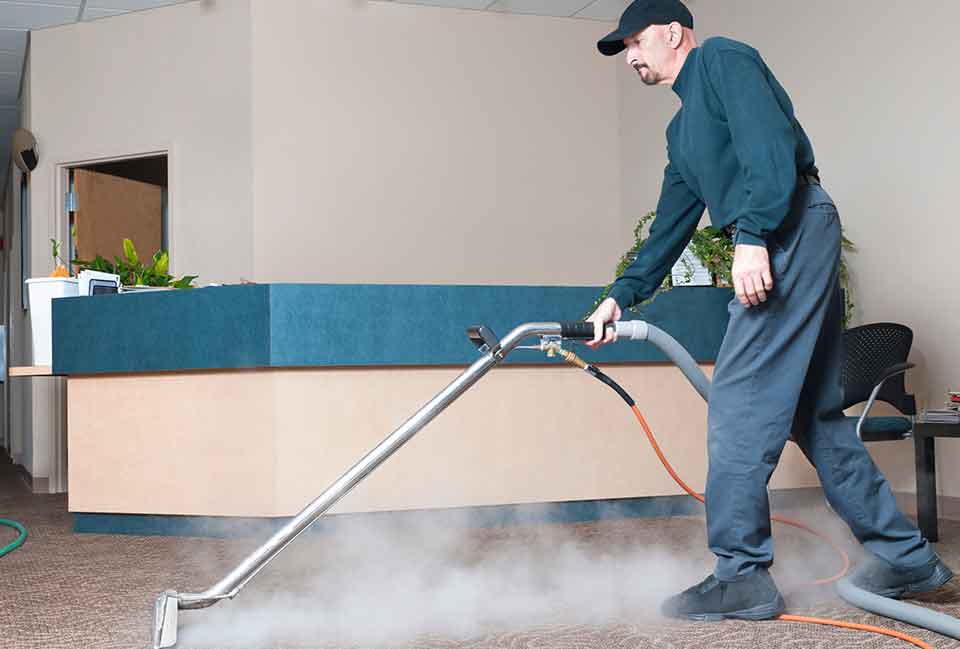
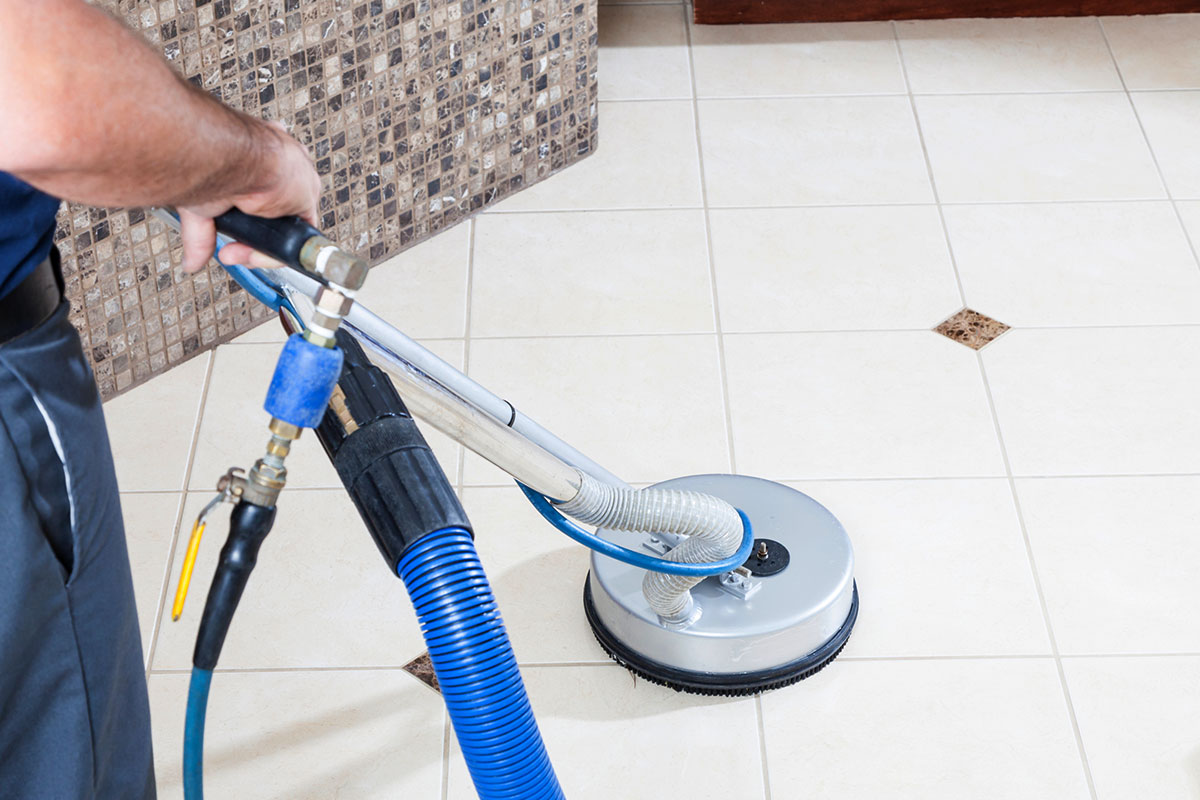
- High pressure extraction. A spinner tool that blasts hot water into the grout and vacuums it straight back out at the same time, so the dirty water goes into the truck instead of across your floor.
- Sanitising treatment where mould is present.
- Sealing. A penetrating sealer that closes the pores so the grout stops absorbing everything.
Sealing is the step people skip and then wonder why it looks bad again within a year. Cleaning without sealing is leaving the sponge open.
Why bleach is not the answer
Bleach removes the colour from mould. It does not necessarily kill the growth in a porous surface, because the roots sit below the surface where bleach, being mostly water, dilutes before it gets there. So the grout looks white for a fortnight and then the spots reappear, and everyone concludes the mould is “unkillable”. Repeated bleaching also erodes the grout and can damage silicone, coloured grout and natural stone permanently.
What it costs in Australia
General market guidance for 2026:
- Standard bathroom floor and shower: around $150 to $350
- Kitchen floor: often priced per square metre, commonly around $8 to $18 per m2
- Grout sealing: commonly $3 to $8 per m2 as an add-on
- Grout colour sealing or recolouring: higher again, but it can rescue grout that cleaning alone cannot
Most companies have a minimum call out, so combining the bathroom with the kitchen, laundry or entry tiles usually gives you far better value than doing one small area on its own. Ask whether sealing is included or extra – that is where quotes differ most.
When cleaning is not enough
We will tell you honestly when you have hit the limit:
- Grout has eroded or is crumbling. It needs regrouting, not cleaning.
- Mouldy silicone in the corners. Silicone cannot be cleaned once mould is under the surface. It gets cut out and replaced – a cheap job that transforms how a shower looks.
- Persistent damp patch. Waterproofing failure. A tiler or waterproofer, not a cleaner.
- Grout that will never be uniform again. Colour sealing is the answer here, and it gives a consistent finish that cleaning cannot.
Keeping it clean afterwards
- Run the exhaust fan during every shower and for 20 minutes afterwards. This is the single most effective thing you can do.
- Squeegee the shower walls. Thirty seconds a day beats an afternoon of scrubbing.
- Use pH neutral cleaners. Acidic and strongly alkaline supermarket products erode grout and strip sealer.
- Leave the shower screen open so air can move through.
- Reseal every couple of years, or when water stops beading on the grout lines.
Frequently asked questions
Will my grout come back to bright white?
Sometimes, and it depends entirely on the grout. Cleaning restores the original colour; it cannot make grout whiter than it was manufactured. Where original colour cannot be recovered, colour sealing gives a uniform finish that looks new.
Is professional grout cleaning safe for natural stone?
Only with the right products. Acidic cleaners will etch marble, travertine and limestone permanently. Always tell your cleaner what your tiles are, and if you are not sure, say so – it should be checked before anything is applied.
How long does it take?
A typical bathroom takes one to two hours. Sealing needs the surface dry, so it is often done as a second stage or later the same day.
How often should tiles and grout be professionally cleaned?
Every one to two years for a busy family bathroom or kitchen, and reseal at the same time. Between visits, ventilation does most of the work.
Can you remove mould from shower silicone?
Not reliably. Once mould is growing beneath the surface of silicone, replacement is the proper fix.
Get your tiles looked at properly
If your grout is going dark and you are not sure whether it is mould, staining or a moisture problem, we are happy to take a look and tell you straight. Call Adam’s Carpet Cleaning on 1300 309 276 or request a free quote online for tile and grout cleaning across Sydney. Family owned, 20 plus years, and we would rather tell you to call a waterproofer than take your money for a job that will not last.