flooded-carpet-image

Flood Carpet Cleaning Sydney

Most flooded carpet can be saved when the water was clean and extraction starts within 24 to 48 hours. After that window, water moves into the underlay and subfloor, mould growth becomes likely, and the decision often shifts from cleaning to replacement. NSW Health advises drying water-damaged materials within 48 hours for exactly this reason. Acting inside that window is usually what will save your carpet. Adam’s Carpet Cleaning provides emergency water extraction, carpet drying services and honest advice for Sydney homes and businesses.

Call 1300 309 276 and tell us the water source, the rooms affected and the time the flooding started. If water is near live electrical outlets, the ceiling is sagging, or sewage is involved, keep everyone out and call an electrician, plumber or emergency service first.

Can a flooded carpet be saved?

A flooded carpet can usually be saved when three conditions are met: the water was clean, fewer than 48 hours have passed, and the backing has not delaminated. Carpet soaked by a burst supply line and extracted the same day is routinely restored. Cleaning carpets soaked by sewage or stormwater is a different question, because contamination sits inside the fibres and underlay rather than on the surface. The IICRC S500 standard treats those as Category 3 water and recommends removal of porous materials. We clean flooded carpet only where restoration is safe, and we clean carpets exposed to sewage only under contamination controls.

The three signs your carpet was wet for too long

A carpet wet for too long shows three signs: a musty smell, brown wicking stains, and separation between the backing layers. All three together usually mean the damage to your carpet is structural rather than cosmetic, and no amount of cleaning reverses delamination. Under the IICRC S500 framework, clean water left standing beyond 48 hours is reclassified as contaminated, which changes the recommendation from cleaning to removal. Whether you can get your carpet back to normal depends on the source, the delay and the construction, so we give a straight answer after inspection rather than charging for work that will not hold.

What to do in the first hour your carpet is wet

In the first hour, stop the water source if it is safe to reach, switch off power to the affected rooms at the switchboard, and move people and pets out. Photograph every wet area and every damaged item before anything is moved, because the Insurance Council of Australia advises documenting damage before clean-up begins. Lift what you can carry off the carpet, especially timber furniture and cardboard boxes, which bleed stain into wet carpet fibres within hours. Put foil or plastic under furniture legs that cannot be moved. A wet carpet after a flood almost always hides more water than the surface shows.

Do not leave the carpet and let it sit

Waiting for a wet carpet to dry on its own is the single most common mistake we see in Sydney homes. Do not leave the carpet and let it sit while you wait for the surface to look better, because the underlay below can stay saturated for days after the pile feels dry to touch. NSW Health guidance puts the practical limit at 48 hours before mould becomes a serious risk. Carpet padding holds several times its own weight in water, so a floor that looks dry at hour 12 can still hold 20 or 30 litres underneath.

Clean, grey and black flood water: the source decides everything

Water damage is graded in three categories under the IICRC S500 standard, and the category sets the whole response. Category 1 is clean water from a burst supply pipe or an overflowing basin. Category 2 is grey water from a washing machine, dishwasher or toilet overflow without solids. Category 3 is black water from sewage, stormwater, river flooding or any water that has sat long enough to grow bacteria. Clean water that sits for more than 48 hours is reclassified as Category 2. Flood water entering from outside is treated as Category 3 no matter how clear it looks.

Why Category 3 carpet is removed rather than cleaned

Carpet affected by Category 3 water is almost always removed rather than cleaned, because no cleaning process reliably sanitises the underlay beneath it. The IICRC S500 standard recommends discarding porous materials contaminated by Category 3 water, and NSW Health gives the same advice for soft furnishings soaked by floodwater. In those cases we will tell you to replace your carpet rather than clean it. Hard surfaces underneath can usually be cleaned and sanitised in place, so removal is rarely as total as people expect once the carpet and underlay are out.


flooded-carpet-cleaning-image
24hour-service

Reach out to us today to get a free quote

Call us on 1300 309 276 or fill out the form below

Online Quote internal

Your Information Is Handled Securely

Residential Flood Damage Restoration

Residential flood damage in Sydney homes

Five causes account for most residential jobs we attend: burst flexible hoses under sinks, failed hot water systems, overflowing washing machines, blocked stormwater drains and rain entry through windows or roof leaks. The Insurance Council of Australia consistently lists burst flexible hoses among the most common household water damage claims in Australia, and they usually fail while nobody is home. Our cleaning experts assess bedrooms, hallways, living areas and built-in wardrobes, then run the agreed extraction and drying steps room by room. Wardrobes are checked carefully because water tracks under walls and sits unnoticed beneath stored items.

Commercial Flood Damage Restoration

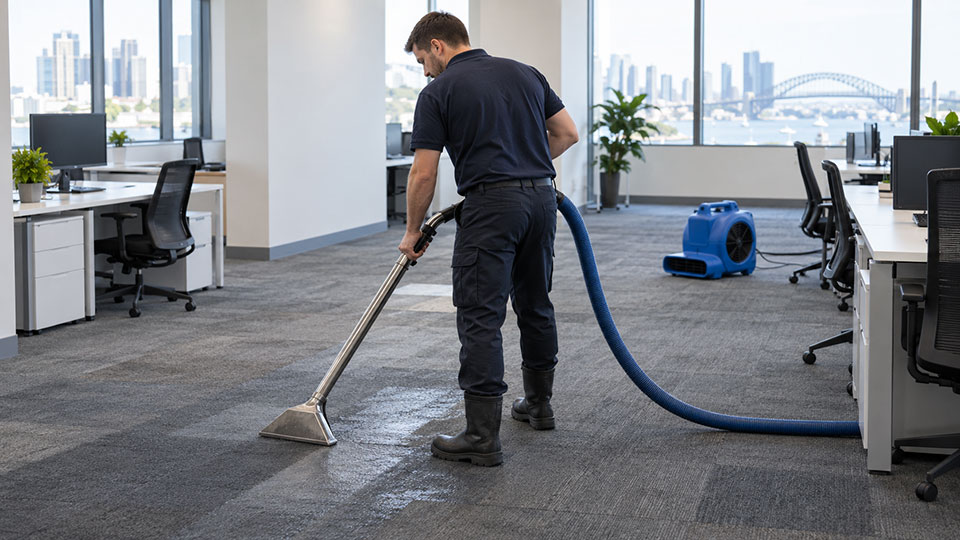
Commercial flooded carpet cleaning services

Offices, retail shops, strata buildings and aged care facilities need a plan that keeps the business trading while the carpet dries. We stage work zone by zone, run equipment after hours where noise matters, and provide written moisture logs for the building manager, strata committee or insurer. Under NSW strata legislation, common property water damage usually sits with the owners corporation, so documentation matters more on these jobs than on residential ones. Commercial carpet restoration often involves coordinating with plumbers, electricians, builders and hygienists, and we set out clearly what our team handles.

The trusted name in Flooded Carpet Cleaning

We’re dedicated to providing personalised care with the capability to handle jobs of any size
25years-of-experience

25+ Years of Experience

Australia flag

Australian Owned & Operated

With years of experience in the industry, we have developed a deep understanding of the complexities involved in flood recovery. Our clients consistently choose us for our proven track record of delivering exceptional results, ensuring their properties are thoroughly restored and protected from future issues.

Choosing Adam’s Carpet Cleaning means partnering with a company that values integrity and transparency. We prioritise open communication and provide clear, honest assessments and recommendations tailored to your specific needs.

Trust us to handle your flood damage restoration with the expertise and care that have made us a respected name in the industry.

We charge per job

We charge per job

Not by hour, so you can be sure of the cost before we start
Upfront pricing

Upfront pricing

Clear and straightforward pricing with no hidden fees or surprises
We use safe and environmentally friendly products

Eco-friendly Cleaning Solutions

We use safe and environmentally friendly products.
We stand by our services and strive for 100% customer satisfaction.

Satisfaction Guaranteed

We stand by our services and strive for 100% customer satisfaction.

Fast water extraction: how we remove as much water as possible

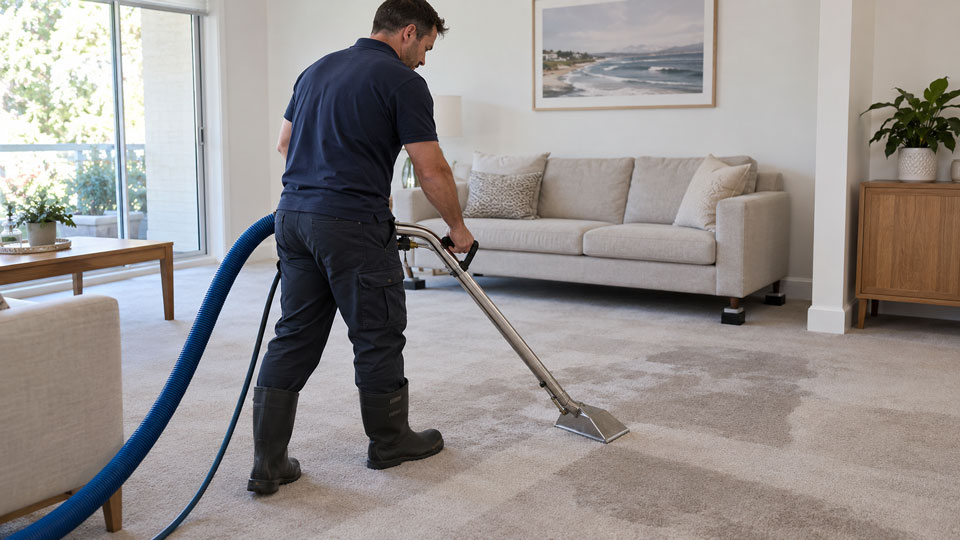
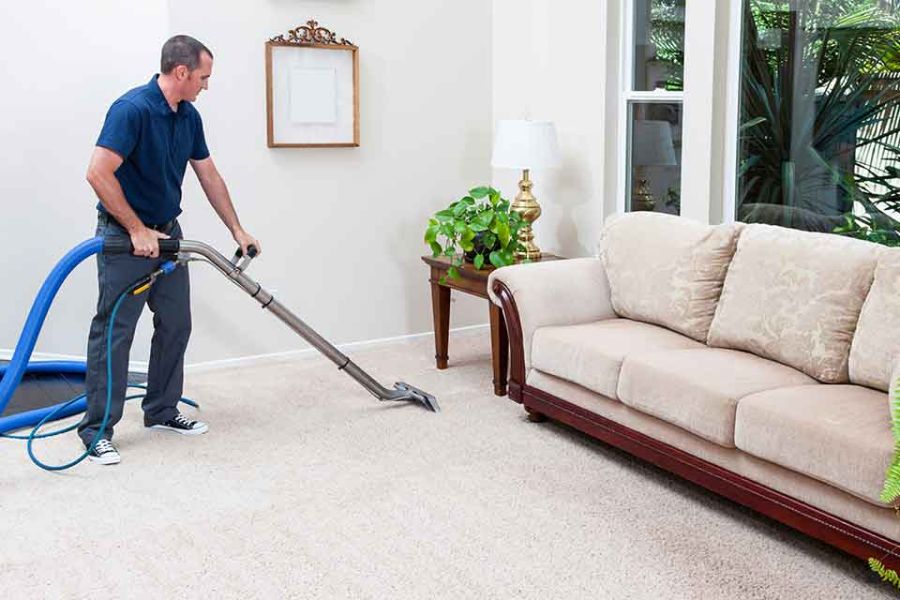
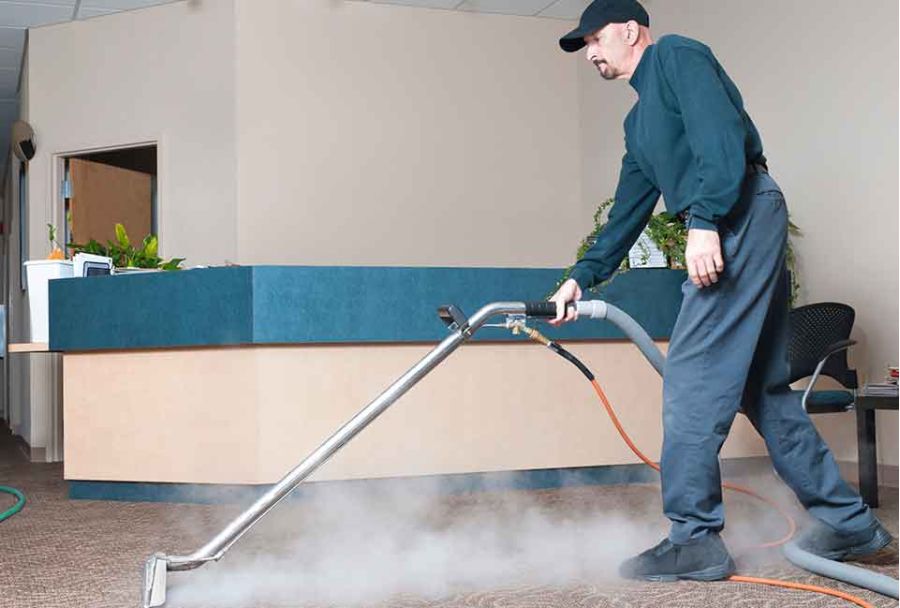
Extraction removes far more water from the carpet than drying equipment ever will, so it always comes first under IICRC S500 drying principles. We use truck-mounted and portable extraction units with weighted wands that press the pile while they pull, which draws water out of the backing rather than skimming the surface. We remove as much water from the carpet as possible, and a single room can hold 40 to 100 litres depending on pile depth and underlay type. Extraction of one affected room typically takes one to three hours.

Why fans alone will not dry wet carpet

Air movers and dehumidifiers only handle the moisture left behind after extraction, which is roughly 10 per cent of the original volume on a well-extracted job. Running fans on a carpet still holding litres of water wastes days and pushes humid air into walls and cabinetry. The IICRC S500 standard describes extraction, airflow and dehumidification as a sequence rather than alternatives. Pulling out as much from the carpet as possible by machine is what shortens the drying time, and air movement only has to help to dry what is left behind.

Removes allergens and dust mites from your furniture.

Improved Air Quality

Removes allergens and dust mites from your furniture.
carpet-cleaning-icon

Enhanced Appearance

Restores the original beauty of your carpet.
Stain Removal

Stain Removal

Remove stubborn stains that DIY methods might not.
Improve life span of your upholstery

Extended Lifespan

Regular cleaning prevents premature wear and tear.

Our professional flooded carpet cleaning process

Every job is different, but the method is consistent. These seven steps follow the sequence set out in the IICRC S500 standard. Every step is recorded with readings and photos, which is the documentation most Australian insurers request. The cleaning process is scoped in writing before work starts.

  • Safety and source check: Confirm the water source, electrical safety, contamination category and access.
  • Moisture mapping: Use moisture meters and thermal imaging to find water underneath the carpet, in skirting boards and in wall cavities.
  • Water extraction: Remove as much water from the carpet and underlay as the equipment can recover.
  • Material decision: Assess carpet, underlay, subfloor and adjacent finishes for drying or removal.
  • Cleaning and sanitising: Clean the carpet using the method appropriate to the water category and fibre type.
  • Structural drying: Position air movers and dehumidification to speed up the drying process safely.
  • Monitoring: Re-check moisture readings daily and adjust until the agreed dry standard is reached.

Flooded carpet drying: how long does carpet take to dry?

The time for carpet to dry after a flood is typically three to five days once it has been professionally extracted with commercial equipment running. A partially wet area caught early can be dry in 24 to 48 hours. A full-room flood that reached the underlay, skirting and wall base often needs seven or more days to dry under monitoring. The IICRC S500 standard sets the end point by moisture readings rather than by a fixed number of days, which is why we measure instead of guessing. Sydney humidity in February routinely adds a day or two.

What drying time actually depends on

Drying time depends on how much water was absorbed, the underlay type, the subfloor material, and the temperature and humidity in the room. Drying the carpet depends most of all on the underlay, because rubber-backed underlay holds water far longer than foam. A concrete slab releases moisture for weeks after the carpet above it reads dry, which is why we measure the slab as well as the pile. Particleboard subfloor swells permanently once saturated. In a Sydney winter, a closed room with no heating can take twice as long as the same room in October.

Mould and mildew: how fast mould growth starts

Mould can begin growing in a wet carpet within 24 to 48 hours in Sydney’s climate and becomes visible between day three and day seven. NSW Health advises that mould will grow wherever moisture remains for more than 48 hours. Mould and mildew need moisture, warmth and a food source, and carpet backing, underlay and household dust supply all three. This is why the speed of drying wet material matters more than cleaning technique in the first few days. Extraction on day one changes the outcome far more than a better cleaning chemical on day four.

How to tell if there is mould under your carpet

Four signs point to mould growth underneath the carpet: a musty smell that returns after the carpet feels dry, dark patches along skirting boards, lifting vinyl at doorways, and new allergy symptoms in the household. If any of those appear, stop using fans in that room, because air movement spreads spores through the house. NSW Health recommends that mould affecting more than about one square metre be handled by a professional. We identify visible mould within our scope and say plainly when a licensed remediation specialist or occupational hygienist is required. No honest professional carpet cleaning company will claim that steam cleaning remediates contaminated material.

Dealing with a flooded carpet right now?

If you are faced with a flooded carpet, keep everyone clear of electrical hazards and call 1300 309 276 with the address, the water source, the rooms affected and the time it started. The first 48 hours decide most outcomes, so the call matters more than anything you do with towels. We will talk you through the first safe step and confirm availability for emergency extraction across Sydney, including the North Shore, Northern Suburbs and Hills District.

Request a fast quote today

Ready to refresh your carpet? Contact us today to schedule an appointment or request a free quote. Our friendly team is here to help!
adams-carpet-contact-phone

Describe your requirement to get a quote

Services page middle request free quote

Your Information Is Handled Securely

Emergency-carpet-cleaning
We are 24/7 available, call us today for same day services

Emergency Flood Damage Restoration

Emergency flood damage restoration services are designed to provide rapid response and professional expertise to handle the complexities of flood recovery. Our team at Adam’s Carpet Cleaning is equipped with advanced tools and techniques to extract water, dry affected areas, and prevent further damage, such as mould growth and structural weakening. We understand that time is of the essence, which is why our emergency services are available 24/7, ensuring that help is just a call away whenever you need it most.

We utilise high-powered pumps and industrial-grade dehumidifiers to remove water and moisture from your property efficiently. Our trained technicians also focus on sanitising and deodorising your space to eliminate any harmful bacteria or unpleasant odours left behind by the floodwaters. Trust Adam’s Carpet Cleaning for reliable and effective emergency flood damage restoration services that bring peace of mind during challenging times.

You name it, we do it all

Flood restoration services we provide

24/7 emergency response across Sydney and surrounding suburbs

Rapid water extraction and water removal

Moisture Detection

Dehumidification and air scrubbing

Carpet drying with commercial equipment

Odour Removal

Structural Drying

Carpet and Upholstery Cleaning

Mould Prevention and Remediation

Document and Content Drying

Damage Assessment

Board-Up and Tarp Services

Reconstruction Services

Sanitisation, deodorising and odour removal

Flooded carpet restoration or carpet removal: how we decide

We recommend carpet removal in four situations: Category 3 water, carpet wet for more than 72 hours, delaminated backing, or odour that persists after cleaning and drying. We recommend flooded carpet restoration when the water was clean, the response was quick and the backing is intact. Carpet damaged beyond that point is not worth repeated treatment. The IICRC S500 standard draws the same line, treating contamination and exposure time as the deciding factors rather than the age or value of the carpet itself.

Why the underlay goes even when the carpet stays

Underlay is treated separately from the carpet itself, and in most Category 2 and Category 3 jobs it is removed and replaced even where the carpet is saved. Underlay is porous, cheap to replace at roughly 10 to 15 dollars a square metre, and almost impossible to sanitise in place, which is why the IICRC S500 standard treats it as a disposable material. We never remove your carpet without agreeing the scope with you first. If the carpet isn’t economical to restore, we say so early rather than billing for three visits that end in replacement anyway.

Carpet underlay, carpet padding and the subfloor

Carpet padding absorbs several times more water than the carpet above it, and it is the main reason a surface can feel dry while the floor stays wet. Checking the carpet and padding separately is standard practice on any water-damaged carpet, and moisture readings show how far the carpet water has travelled. Below the underlay, particleboard swells permanently once saturated and timber flooring cups and lifts. The IICRC S500 standard calls for readings at each material layer, so we take them at pile, underlay and subfloor rather than assuming one reading covers all three.

How to dry wet carpet safely: tips for drying small spills

For a small, recent, clean-water spill under about one square metre you can manage it yourself. To dry a wet carpet of that size, blot with dry towels under steady body weight, replacing towels as they saturate. Use a wet vacuum designed for liquids if the electrical environment is safe, never a household dry vacuum, which Safe Work Australia guidance treats as an electrocution risk around liquid. Open windows, run a fan across the wet area and let the surface air dry. If you plan to dry your carpet yourself, stop at the first sign water has spread.

When you can lift the carpet yourself

You can lift the carpet and keep air moving underneath the carpet only when three conditions hold: the water was clean, there is no electrical risk, and the floor is stable. Do not lift the carpet and place fans underneath when the water may be contaminated, because that spreads bacteria through the room, which is why NSW Health advises against disturbing flood-affected materials without protection. Do not sprinkle baking soda over the wet area as a substitute for extraction. It clumps in the backing, does not remove water from the carpet padding, and makes later cleaning harder. If water has spread beyond the original spill, stop trying to dry your flooded carpet yourself and call a carpet cleaner.

tips-for-flooded-carpet

What not to do with flooded and water damaged carpet

Six mistakes account for most of the avoidable damage we see, and several carry a genuine safety risk rather than just a cost. Ausgrid and NSW emergency services both warn against entering water near live electrical equipment.

  • Do not walk through standing water near live power outlets or appliances.
  • Do not use a household dry vacuum on liquid, which is an electrocution risk.
  • Do not mix bleach with other cleaners, which produces chlorine gas.
  • Do not assume storm or sewage water is safe because it looks clear.
  • Do not run fans in a room where mould is suspected, as this spreads spores.
  • Do not replace furniture before the carpet is completely dry.

WHAT OUR VALUED CUSTOMERS SAY

Google review profile photo
Ace Skips Bins
1 week ago
Fast, great price and most importantly very professional
Google review profile photo
Serah Vincent
2 months ago
Thank you Adam’s company, doing an excellent work.
Google review profile photo
Angela
2 months ago
Carpet turned out good and very friendly service. Would recommend
Google review profile photo
Marianne Morton
3 months ago
Professional, friendly, honest. Trifecta when dealing with trades. Great result and happy to recommend to other their services.
Google review profile photo
Breanna Thompson
3 months ago
Great experience with this business, efficient and on time with great attention to detail. Highly recommend
Google review profile photo
Daniel Halm
4 months ago
Exceptional service and came out on super short notice
Google review profile photo
josh buerckner
5 months ago
Used these guys for our rental as we had a cat. Was very honest and efficient. Also compared to others we have used who take a couple of hours, he was done in like 30 mins. Highly recommend the use of these guys!
Google review profile photo
The Valour
5 months ago
Adam’s Carpet cleaning/pest control is really good, I have used him a couple of times for my home, and each time the carpet looks brand new and smells nice, we use to get little insects during weather change but ever since Adam has done the pest control I have not seen any insects I highly recommend using Adam’s Carpet Cleaning and Pest Control Services for your home
Google review profile photo
Adnan Ramzan
5 months ago
Very satisfied he always do good job with patience been with them from last 5 years and really happy customer
Google review profile photo
Riya Amer
5 months ago
The best carpet cleaner, my carpet looks spotless! thankyou so much ☺️

Watch Our Work on YouTube

Discover the quality of our upholstery cleaning services by watching our latest videos on YouTube. See our skilled team in action as we tackle various cleaning challenges, from deep stains to routine maintenance. Our videos showcase the effectiveness of our methods and the impressive results we achieve.

The benefits of professional carpet cleaning after water damage

Professional extraction removes several times more water than any domestic wet vacuum, which is the single biggest factor in whether a carpet survives. Commercial dehumidifiers pull moisture out of the air so the room keeps drying instead of stalling at equilibrium, which is what happens when fans run alone in a closed room. The other benefit is measurement: a professional carpet cleaning service verifies dryness with meters rather than touch. AS/NZS 3733 sets out the maintenance cleaning methods that apply once the carpet is dry, and deep cleaning belongs at that point rather than before.

Clean and dry verification before deep cleaning

A carpet is only confirmed dry when moisture readings in the pile, underlay and subfloor match the dry standard measured in an unaffected room of the same building. That comparison method is the dry standard defined in the IICRC S500 standard. Surface feel is not a test, because the top of a pile can read dry while the backing holds water. A dry carpet result is a reading, not a feeling. Once the carpet is completely dry it can be steam cleaned, which is why we clean the carpet last and dry the carpet first.

Insurance and documentation for flood damage

Most home and contents policies cover sudden water damage from a burst pipe or appliance failure, while flood from a river or stormwater usually requires separate flood cover. Flood has a standard definition in Australia set by the Insurance Contracts Regulations, which is why the distinction matters on a claim. Gradual damage from a slow leak is commonly excluded. Check your product disclosure statement and lodge the claim before disposing of anything. We provide a written scope, moisture readings, equipment logs and photographs, which is the evidence most insurers request.

Got Questions

These are the questions Sydney households ask us most often after a flood. What you need to know about cleaning a flooded carpet comes down to three things: the water category, how many hours have passed, and the condition of the underlay. A carpet may look fine on the surface while the layer beneath it is still holding 20 or 30 litres. Cleaning your carpet is the last step in the sequence rather than the first, which surprises most people who call us on day one.

How long does it take for mould to grow in wet carpet?

Mould can start growing in wet carpet within 24 to 48 hours and is usually visible within three to seven days. NSW Health advises drying water-affected materials within 48 hours for this reason. Warm, humid weather shortens the window considerably, so a Sydney summer flood behaves differently from the same flood in July. Mould needs moisture, warmth and a food source, and carpet underlay supplies the last two on its own. Extraction on day one is what prevents it, not cleaning on day four.

Does carpet need to be replaced after flooding?

Carpet needs replacing in three situations: exposure to sewage or stormwater, staying wet longer than 72 hours, or delaminated backing. Carpet flooded with clean water and extracted quickly is usually restored rather than replaced. The IICRC S500 standard recommends discarding porous materials affected by Category 3 water, which includes anything that came in from outside. Underlay is replaced far more often than the carpet above it, because it holds more water and cannot be sanitised in place.

Can a soaking wet carpet be saved?

A soaking wet carpet can be saved if the water was clean and extraction starts within about 48 hours. The underlay underneath is replaced more often than the carpet itself, because it absorbs several times more water per square metre. Saturation alone does not ruin a carpet; contamination and time do. A carpet fully soaked by a burst supply pipe on Monday and extracted Monday afternoon is usually fine, while the same carpet left until Thursday generally is not.

How long can water sit on carpet?

Clean water should be extracted within 24 to 48 hours, after which the IICRC S500 standard reclassifies it as Category 2 contaminated water. Past 72 hours, mould risk and backing damage make restoration far less likely. The clock runs faster in warm weather, so a Sydney January spill has a shorter safe window than the same spill in June. If you cannot get professional extraction quickly, removing as much water as possible yourself still improves the odds.

How do you get moisture out of wet carpet?

Mechanical extraction with a weighted wand removes the bulk of the water, then air movers and dehumidifiers remove the rest. Fans alone cannot pull water out of the backing or padding, which is why the IICRC S500 standard sets extraction before airflow in the drying sequence. A professional extraction unit recovers roughly ten times what a domestic wet vacuum manages on the same area. Expect one to three hours of extraction per affected room, then several days of monitored drying.

What soaks up water from carpet?

A wet and dry vacuum is the only household tool that meaningfully removes water from the carpet. Dry towels work for small spills under about one square metre, while absorbent powders such as baking soda do not reach the underlay and clump in the backing. A household dry vacuum must never be used on liquid, which Safe Work Australia guidance treats as an electrocution risk. For anything larger than a single room, professional extraction equipment is the only practical option.

How do I know if there is mould under my carpet?

Four signs indicate mould underneath the carpet: a musty smell that returns after drying, dark staining along skirting boards, lifting vinyl at doorways, and increased allergy symptoms in the household. A moisture meter reading above the dry standard confirms the conditions for mould growth even before it is visible. NSW Health recommends professional handling for mould covering more than about one square metre. Lifting a corner of the carpet near the wettest point is usually the quickest confirmation.

How do you get flood stains out of carpet?

Brown wicking stains are drawn up from the backing as the carpet dries, so they are treated after drying rather than during. Treating them early simply adds more water and they return. Stains from sewage or heavy silt are generally not safely recoverable, because the issue is contamination rather than appearance. AS/NZS 3733 covers the maintenance cleaning methods used once the carpet is dry, and that is the right point to address residual staining. Carpet steam cleaning at that stage lifts most wicking marks in a single pass.

How long does it take to extract water from a carpet?

Extraction usually takes one to three hours per affected room, depending on saturation, access and underlay type. Drying and monitoring then continue for three to five days on a typical job, or seven or more days where water reached wall bases. A single flooded room can hold 40 to 100 litres of water, so extraction time scales with volume rather than floor area alone. Moisture readings determine when the equipment comes out, not a fixed schedule.

Will my insurance cover flooded carpet cleaning?

Sudden water damage from burst pipes or appliances is commonly covered, while river and stormwater flooding generally needs separate flood cover. Flood has a standard definition set by the Insurance Contracts Regulations in Australia, so the cause determines the outcome more than the damage does. Gradual damage from a slow leak is usually excluded. Lodge the claim early, photograph everything before clean-up, and keep our written scope and moisture logs, which is the evidence most insurers request.

How often should carpets be professionally cleaned?

Most Sydney households benefit from professional carpet cleaning every 12 months, or every six months with pets or heavy traffic. AS/NZS 3733 sets out maintenance cleaning intervals based on traffic rather than a single fixed figure, and commercial sites often need quarterly attention. That is routine maintenance and sits separately from flood response. Many carpet warranties also require documented professional cleaning at set intervals, so keeping the receipts matters if you ever make a claim on the carpet itself.

Can every carpet be restored?

No. Contamination, delay beyond 72 hours, delamination and age can each make replacement the safer and cheaper outcome. The IICRC S500 standard treats water category and exposure time as the deciding factors rather than the value of the carpet. We give that assessment after the first inspection rather than after three failed attempts, because repeated treatment of a delaminated or contaminated carpet costs more than new underlay and carpet in most Sydney homes. Replacing a flood damaged carpet is often the cheaper outcome once three visits are added up.

GET IN TOUCH

Call us on 1300 309 276 for all emergencies or fill in the form for a free quote
Contact Form

Your Information Is Handled Securely

Latest Insights and Updates on our Services

Stay informed and get expert advice on maintaining your flood damage restoration with our latest blog posts. Our blog section covers a wide range of topics, from DIY cleaning tips and stain removal techniques to the benefits of professional upholstery cleaning and more.
Professional cleaning removes mould growing on grout, but not black staining that goes all the way through or moisture coming from behind the tiles. Here is how to tell the difference, what the process involves, and what it costs.
Wet carpet gives you roughly 24 to 48 hours before mould becomes a problem. Here is exactly what to do in the first hour, why a wet vac is not enough, and when carpet can and cannot be saved.
In NSW you usually only have to pay for professional carpet cleaning at the end of a lease if you kept a pet, or the carpets are worse than fair wear and tear. Here is what agents look for, what it costs, and how to time the clean.
Professional couch cleaning in Sydney typically costs $100 to $200 for a three seater. Here is a full 2026 price guide, what changes the price, and the four questions to ask before you book.
Booking a flea treatment and a carpet clean? Do them on the same day, and clean the carpet first. Here is why the order matters, what a combined visit involves, and how long a flea problem really takes to clear.
Fabric protection does not make carpet stain-proof, it buys you time. Here is when Scotchgard style protection is worth paying for in a Sydney home, how long it lasts, what it costs, and when we tell people to skip it.
Spills and accidents can happen at any time. Whether it is coffee on the lounge room carpet, wine during a dinner party, muddy footprints after rain, or a pet accident, acting quickly can make a big difference. Same-day carpet cleaning helps prevent stains, odours, and deeper carpet damage before the problem becomes harder to remove. […]
Sydney homes deal with a lot of carpet wear, from coastal humidity and everyday dust to pet mess, food spills, and heavy foot traffic. Over time, regular vacuuming can only do so much. That is where professional steam carpet cleaning makes a real difference. Steam carpet cleaning uses hot water extraction to reach deep into […]
Rug cleaning is an essential part of maintaining a clean and healthy home. While many homeowners prefer quick DIY methods for convenience and cost savings, professional rug cleaning offers a deeper, more thorough result. So, which option is actually better—professional rug cleaning or DIY cleaning? The answer depends on your rug type, level of soiling, […]
Keeping your rugs clean is one of the simplest ways to maintain a fresh, healthy, and welcoming home. Rugs often trap dust, dirt, allergens, and spills that build up over time, which can affect both their appearance and indoor air quality. Understanding the essentials of rug cleaning helps you protect your investment and extend the […]